Tell Jules for QSR & restaurant chains
Find what's eating into your restaurant margins, and how to fix it
Your employees see the problems draining restaurant margins. Tell Jules helps you hear their proposed fixes and decide which improvements are worth making across your business.
Built on the Idea Harvest™ methodology behind three decades of Fortune 1000 operations work, including food and multi-location operators.
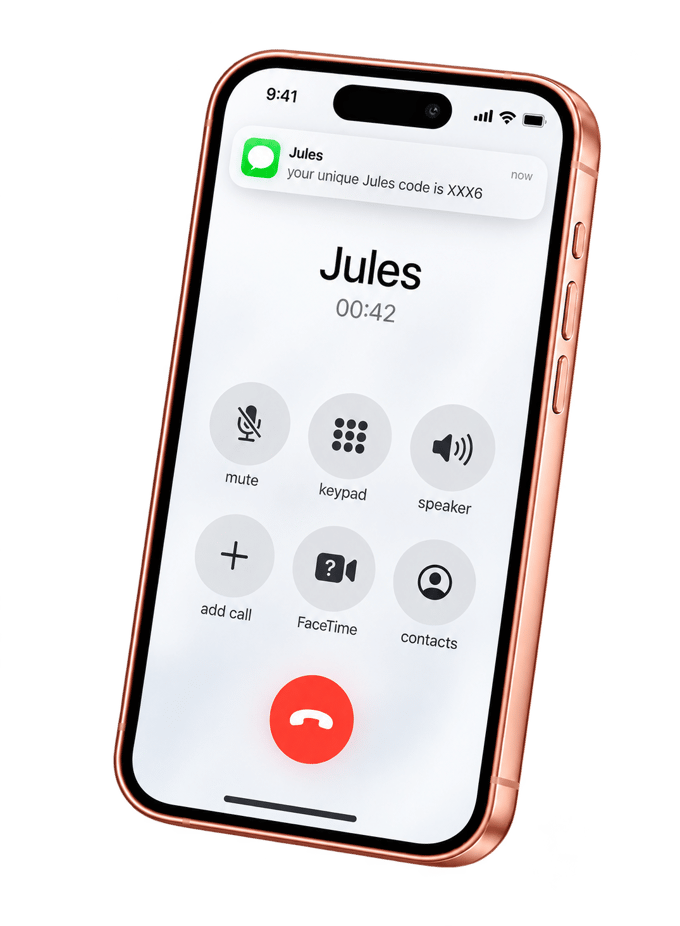
JulesWhat’s getting in the way of doing your work?
EmployeeThe fryer and drive-thru alerts sound the same. During rushes, we miss the fryer timer and waste batches of fries.
Built for restaurant operations like yours
Quick-service, fast-casual, and casual dining chains, franchised and corporate-owned brands, multi-unit operators, drive-thru operations, ghost kitchens, food halls, bakery cafes, coffee chains, catering and commissary kitchens, and venue and travel foodservice.
Why costly problems go unnoticed
Your stores can hit their targets while costly problems go unnoticed
Employees work around slowdowns, waste, and broken processes to keep restaurants running. When those problems never reach leadership, you keep paying for them.
-
Your busiest shifts hide costly slowdowns
Missed handoffs and prep delays during rushes cost you orders and labor, but district visits rarely capture the full picture.
-
One store's fix never reaches the rest
A GM finds a better way to reduce waste or speed service. Other locations keep paying for the same problem.
-
Your reports show the loss, but not the cause
Rising food cost or ticket times tell you where to look. Your crews often know which processes need fixing.
-
Corporate decisions create costs inside stores
Purchasing, delivery, and scheduling policies can increase waste and labor. Fixing them may require several departments.
What Tell Jules does for QSR operators
Find opportunities to serve more customers and keep more of every sale
Your employees see where orders get delayed, food gets wasted, and unnecessary work eats into margins. Hear their proposed fixes and find out which improvements are worth pursuing.
Get more orders through the rush
Slow prep and handoffs mean longer ticket times and fewer orders completed. Hear your crews’ ideas to move more orders through with the same staff.
Illustrative employee response
“We lose four minutes every time grilled chicken runs out. We could change when we prep it, but nobody’s looked into it.”
Cut the food and labor waste eating into margins
Over-prepping, inconsistent portions, and poorly timed shifts raise operating costs. Find out what your employees would change to reduce the waste.
Illustrative employee response
“Corporate’s Sunday prep numbers are way too high for our store. We throw out the same trays every week.”
Fix the recurring problems driving guests away
Late orders, missing items, and inconsistent service cost repeat business. Hear which problems crews see most often and how they’d prevent them.
Illustrative employee response
“Customers keep complaining that their fries are cold. We’re filling them too early because of how the line is set up.”
Reduce the cost of losing experienced employees
Replacing good crew members means more hiring, training, and disrupted shifts. Hear what frustrates them and which changes might help them stay.
Illustrative employee response
“We keep losing students because their schedules never get updated when classes change.”
How Tell Jules works
Hear from your entire operation, one seven-minute conversation at a time
- 1
Choose who to hear from
Start with one restaurant, a group of locations, or a corporate department. No software installation or POS integration is required.
- 2
Your team has a quick conversation with Jules
Each person has a short conversation by phone or chat, in their preferred language. Jules asks what goes wrong, why, and how they'd fix it.
- 3
Get every problem and idea in one place, ready to triage
Get one sortable report with employee-suggested fixes, with guidance to help prioritize improvements.
HIPAA and SOC 2
Conversations are handled in line with HIPAA and SOC 2.
No training on your data
A no-training commitment is written into the terms and conditions.
You control your data
Data is retained and deletable on request.
Confidential or attributed
You choose how responses come back to you.
Jules never needs to connects to your systems. A roster goes in, and problems and ideas come back. See how we handle trust and security.
What you get
The problem, the proposed fix, and what it could be worth
Every employee-suggested improvement comes with guidance on financial impact, risks, and the teams needed to investigate it, so you can decide which ideas deserve attention first.
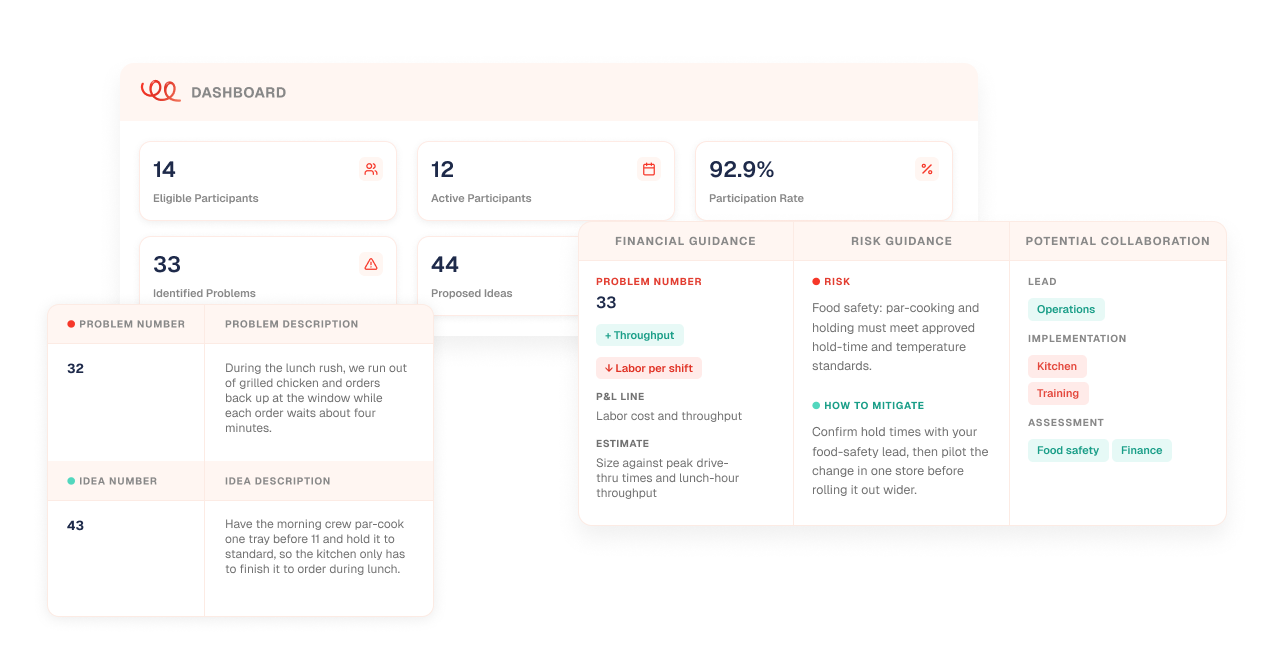
Swipe sideways to see the full dashboard.
Built on Idea Harvest™
For decades, the Idea Harvest™ methodology has drawn on employees' firsthand knowledge to identify operational improvements. Tell Jules brings that employee-listening approach to your entire restaurant business.
For every level of the business
Better-performing stores need better information from every department
A late delivery, a purchasing decision, or an outdated corporate policy can create extra work in every restaurant. Jules hears from store crews and corporate teams, helping you identify problems that need several departments to solve.
-
Leadership
Find recurring costs and improvement opportunities across stores and departments, so you can set priorities.
-
Operations and field leaders
See which problems keep appearing, which fixes could help other stores, and where corporate support is needed.
-
The teams closest to the work
Hear from procurement, distribution, warehousing, finance, HR, and restaurant crews about problems they see and how they'd fix them.
FAQ
The questions on every restaurant operator’s mind
-
How is this different from hiring consultants?
The knowledge you'd pay consultants to find may already be inside your company. Consultants interview employees, analyze their findings, and deliver recommendations over weeks or months. Tell Jules goes straight to the people running your shifts, hearing their problems and ideas in about seven minutes each. You get firsthand insights without the lengthy and expensive consulting engagement.
-
We already have POS data, labor reports, and dashboards. How is this different?
Your reports show where performance is slipping. Jules hears from the employees closest to the work about what's causing it, from prep routines and scheduling problems to broken handoffs. You get specific ideas to investigate behind the numbers.
-
Can't our existing scheduling and task tools do this?
Those systems help your teams manage work. Jules gathers ideas about how that work could be done better, including inefficient processes, recurring workarounds, and policies that create unnecessary costs.
-
How is this different from a district visit or the annual GM conference?
Stores naturally prepare for leadership visits. And even a great district manager can't observe every shift. Jules hears from employees doing the work every day, including the problems and ideas that rarely make it into a store visit or conference.
-
We already use employee surveys. Why use Jules?
Surveys ask everyone a fixed set of questions. Jules asks follow-ups about what each employee reports, including what's causing the problem and how they'd fix it. You get specific suggestions to review instead of having to interpret broad feedback.
-
Can we hear from corporate departments too?
Yes. Procurement, distribution, warehousing, HR, finance, and other corporate teams can participate. Their insights can help explain costs and operational problems that store employees can't solve alone.
-
Does this work for franchised restaurant chains?
Yes. Franchisees and their employees can participate, with findings shared according to the access arrangements you establish. This can help identify recurring problems and useful ideas across participating locations.
-
Can employees speak confidentially?
Yes. You can offer confidential conversations to make it easier for employees to share problems they might hesitate to raise directly.
-
Is our data secure?
Jules doesn't require integration with your restaurant systems. Data access and deletion can be managed, and your agreement covers the commitment not to use your information to train AI models.
-
Do people need an app, account, or company email?
No. People call a number or open a chat. There’s no app to download, no account to create, and no company email required, so your crew can take part even if they never touch a company system.
-
Does Jules work in multiple languages?
Yes. Tell Jules speaks 55 languages and counting, so each person can talk in the one they’re most comfortable using and explain what they actually see instead of flattening it into a second language.
-
Will our crews actually take part?
People take part because it’s easy and it’s theirs. Our clients' employees tell us they enjoy talking to Jules. It listens, asks real follow-up questions, and lets them explain what they see in their own words, and for many it’s the first time someone’s asked in a way that clearly goes somewhere.
See it in your own stores
What could 25 employees uncover about your operating costs?
Your next waste reduction, service improvement, or process fix may already be on someone's mind.
Start with one team, hear their ideas, and see which improvements could be worth pursuing across your business.